Warp Terminal Goes Open Source: AI-Agent Collaboration Model Redefines Community Development
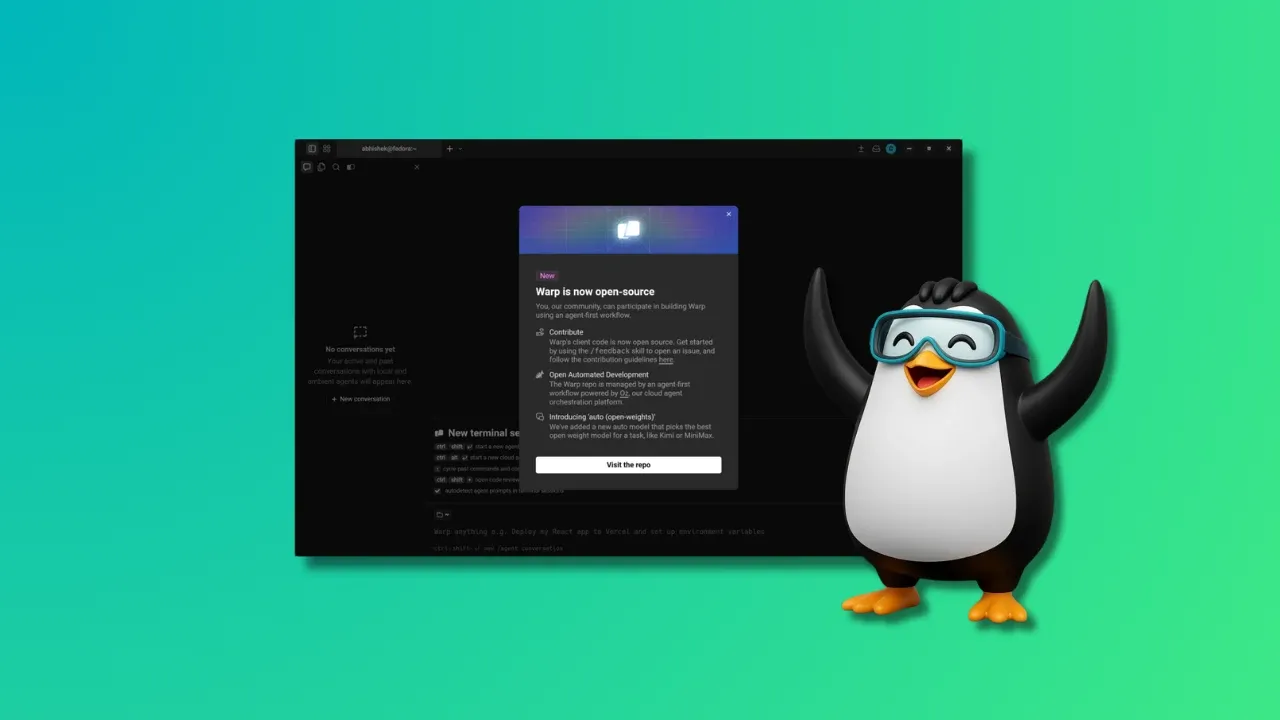
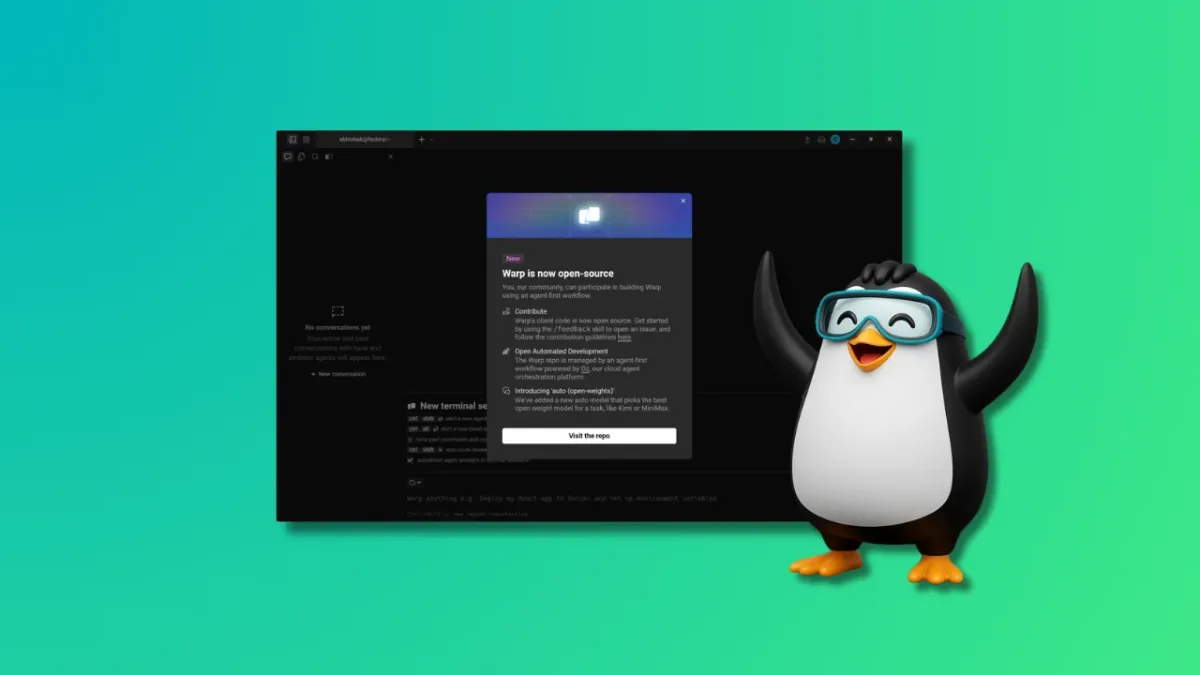
Warp has released its terminal client as open source code on GitHub, but the company's contribution model breaks from tradition: humans will oversee features and verify output, while AI agents write the code.
CEO Zach Lloyd announced the move, stating: "Open-sourcing is fundamentally coming from our desire to build a successful business. We are competing with other highly funded, closed-source competitors, and we think opening and providing the resources for the community to improve Warp is a smart way for us to accelerate product development."
The codebase is now live at github.com/warpdotdev/warp. Licensing is split: the UI framework (warpui_core and warpui crates) uses MIT, while the rest is under AGPLv3.
Background
Warp is a modern terminal and agentic development environment built in Rust. It runs on Linux, Windows, and macOS, featuring a block-based command interface and built-in support for AI coding agents like Claude Code, Codex, and Gemini CLI.
The company's Oz cloud agent orchestration platform, announced earlier this year, enables running multiple coding agents in parallel with full visibility. According to Warp, the main development bottleneck now is human-led tasks—deciding features and verifying software behavior—not code writing. Oz-generated code, guided by Warp's rules and verification processes, aims to let contributors get features right efficiently.
What This Means
This open-sourcing shifts community contribution from traditional pull requests to a model where human contributors focus on ideas, specifications, and review, while agents handle implementation. It signals a potential new paradigm for open source projects competing against well-funded, closed-source rivals.
OpenAI is the founding sponsor of the repository, with GPT models powering agentic contribution workflows. While other coding agents are welcome, Warp recommends using Oz, which has built-in context and checks for this workflow.
The move also expands open source model support: Warp now includes Kimi, MiniMax, and Qwen, plus a new "auto (open)" routing option that selects the best open model for a task. A settings file for programmatic control and easier portability across devices is also shipping.
Warp's approach suggests that the future of open source may involve AI agents as first-class contributors, with humans curating and verifying. The company bets this accelerates development while maintaining quality.
Related Articles
- Why Nearly Half of Americans Reject AI Data Centers in Their Neighborhoods
- 7 Essential Facts About Rust's New Outreachy Program and Its 4 Intern Projects
- Breaking Free from the WebRTC Fork: Meta's Journey to Continuous Upgrades Across 50+ Use Cases
- 8 Crucial Ways GitHub Uses eBPF to Break Deployment Circular Dependencies
- GitHub Launches New Beginner’s Guide to Open Source Contributions: Key Steps Revealed
- GitHub's Reliability Journey: Addressing Growth and Incidents
- Lilbits Roundup: Subscription Models Under Scrutiny, AI Integration Expands, and a Controversial Smartphone
- NHS Open Source Pullback: Security Measures or Misguided Policy?