Performance Cars Steal Spotlight as Beijing Auto Show Ditches Small Hatchbacks
Breaking: Beijing Auto Show Sees Surge in Sporty Models, Subcompacts Fade
The Beijing Auto Show has taken an unexpected turn, with high-performance sports cars and premium SUVs dominating the floor instead of the subcompacts that once defined the Chinese market. Industry analysts report that visitor interest has shifted dramatically toward powerful, luxury-oriented vehicles.
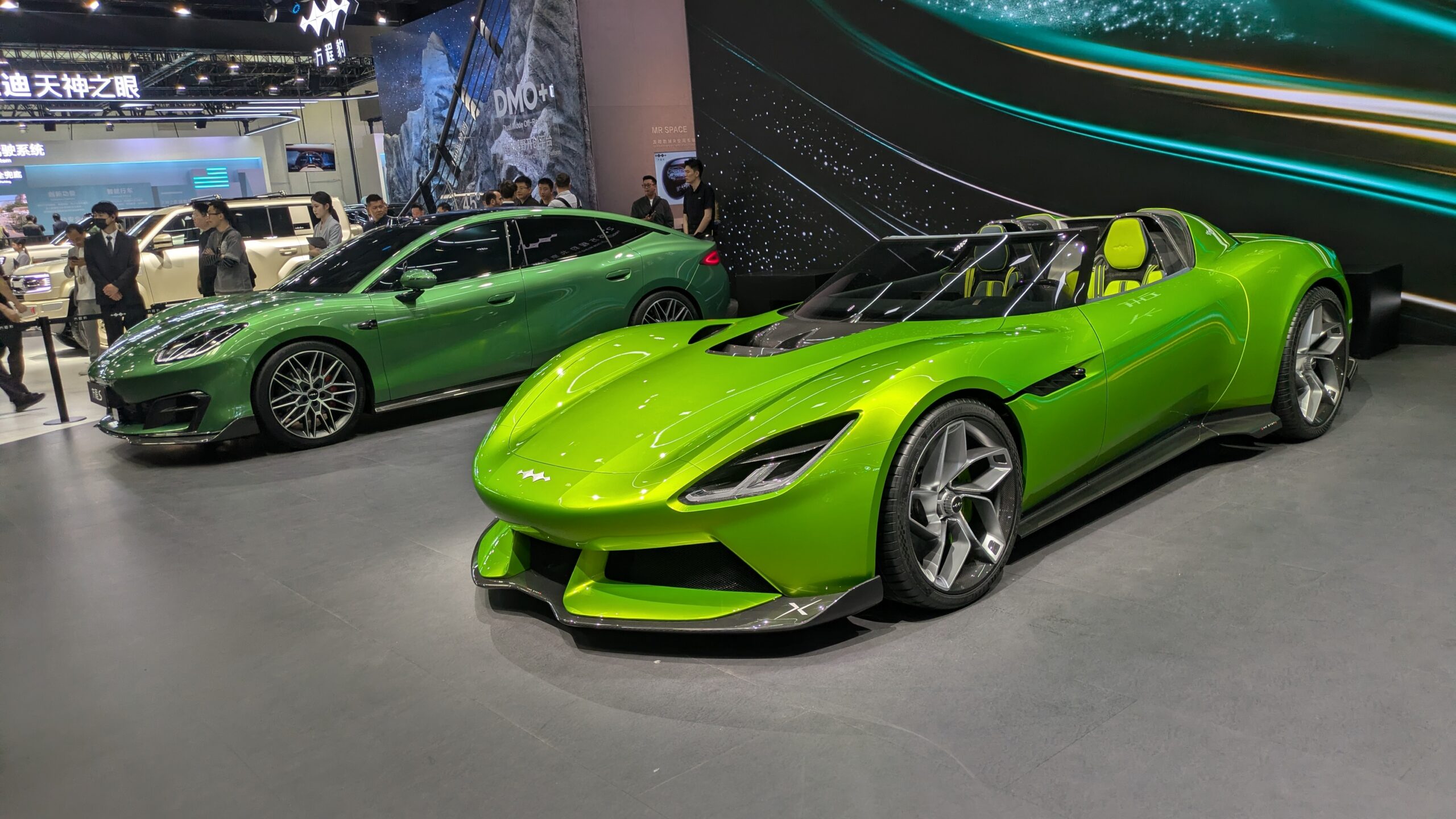
"This is a clear signal that Chinese consumers are maturing rapidly," said Dr. Li Wei, an automotive analyst at Beijing Transport Research. "They no longer see cars as mere utilities; they want excitement and status."
Background
For decades, China's auto market was synonymous with small, affordable subcompacts, driven by government incentives and a growing middle class. But recent economic shifts and changing tastes have pushed automakers to prioritize larger, more profitable segments.
Major brands like BMW, Porsche, and local champion Nio have unveiled concept sports cars and performance-focused SUVs. Even entry-level brands are rushing to add sporty trims to their lineups.
"The subcompact segment is no longer the growth engine it once was," noted Sarah Chen, senior editor at Auto China Today. "Manufacturers are chasing margins, and that means going upmarket."
Show Highlights
- Porsche debuted a limited-edition 911 Turbo S, targeting Chinese collectors.
- BYD unveiled a new electric supercar capable of 0-100 km/h in under 2.9 seconds.
- Mercedes-Benz showcased an AMG G63 modified for the local off-road scene.
These launches contrast sharply with the sparse presence of traditional subcompact models from Honda, Toyota, and Geely. The shift underscores a broader transformation in China's vehicle ownership demographic.
What This Means
The pivot toward sporty cars and SUVs could redefine the global auto industry's strategy in China. Automakers that once focused on cheap, efficient models must now invest in performance engineering and luxury design.
"This is not a short-term fad," cautioned Mark Johnson, head of global strategy at AutoForesight. "It reflects a structural change in wealth distribution and consumer aspirations."
For electric vehicle manufacturers, the trend presents an opportunity to position EVs as high-performance machines rather than eco-friendly alternatives. The Beijing show suggests that the race for speed and status is now as fierce as the race for range and efficiency.
Implications for Subcompact Producers
Companies that rely on subcompact sales—such as Suzuki, Renault, and certain Chinese joint ventures—may face growing pressure to adapt. Without a sporty or premium offering, they risk losing relevance in the world's largest auto market.
Already, analysts predict consolidation in the subcompact segment, with weaker brands exiting or partnering with sportier counterparts.
Expert Reaction
"I’ve been covering the Beijing Auto Show for 15 years, and I’ve never seen such a uniform focus on performance," said Chen. "Even the affordable brands are adding racing stripes and carbon fiber accents."
Dr. Li added, "If this trend continues, the subcompact could become a niche product in China within five years."
For more on China's auto evolution, read our background section above. To understand the market impact, see What This Means.
Related Articles
- ZIGChain Summit 2026: Uniting the Ecosystem for the Future of Regulated Onchain Finance
- How to Redefine Success for Ethical Design Integration
- Nvidia's $2 Billion AI Cloud Investment: 10 Things Every Investor Should Know
- Bitcoin Surges Above $81,000: ETF Inflows Defy Iran Tensions
- 10 Key Facts About the AI-Driven Memory Shortage: Samsung and SK hynix Warn of Extended Scarcity
- How to Embrace Stratum v2: A Guide for Miners, Pools, and Industry Stakeholders
- Strategy Inc. Signals Tactical Bitcoin Sales: Unlocking a $2.2 Billion Tax Advantage
- FBI Alert: Cyber-Criminal Cartels Driving Record $725M Cargo Theft Surge in North America