10 Breakthroughs in Martian Rotorcraft Technology: From Ingenuity to SkyFall
When NASA's Ingenuity helicopter took its first flight on Mars in 2021, it proved that powered flight was possible in the planet's thin atmosphere—a feat many thought impossible. Since its crash-landing in January 2024 after 72 flights, engineers at the Jet Propulsion Laboratory (JPL) have been pushing rotor technology to new heights. Now, with the upcoming SkyFall mission set to launch as soon as 2028, they're designing next-generation rotorcraft that can carry heavier payloads and travel longer distances. Here are 10 things you need to know about this groundbreaking evolution in Martian aviation.
1. Ingenuity's Legacy: Proof of Concept
Ingenuity was a technology demonstrator that exceeded every expectation. Originally tasked with making five flights over 30 days, it completed 72 sorties and covered over 11 miles of Martian terrain. Its success proved that rotorcraft could operate in an atmosphere just 1% as dense as Earth's, opening the door for more ambitious designs. The mission's crash-landing didn't diminish its impact—it provided critical data on vehicle limits and reinforced the value of aerial exploration beyond rovers.
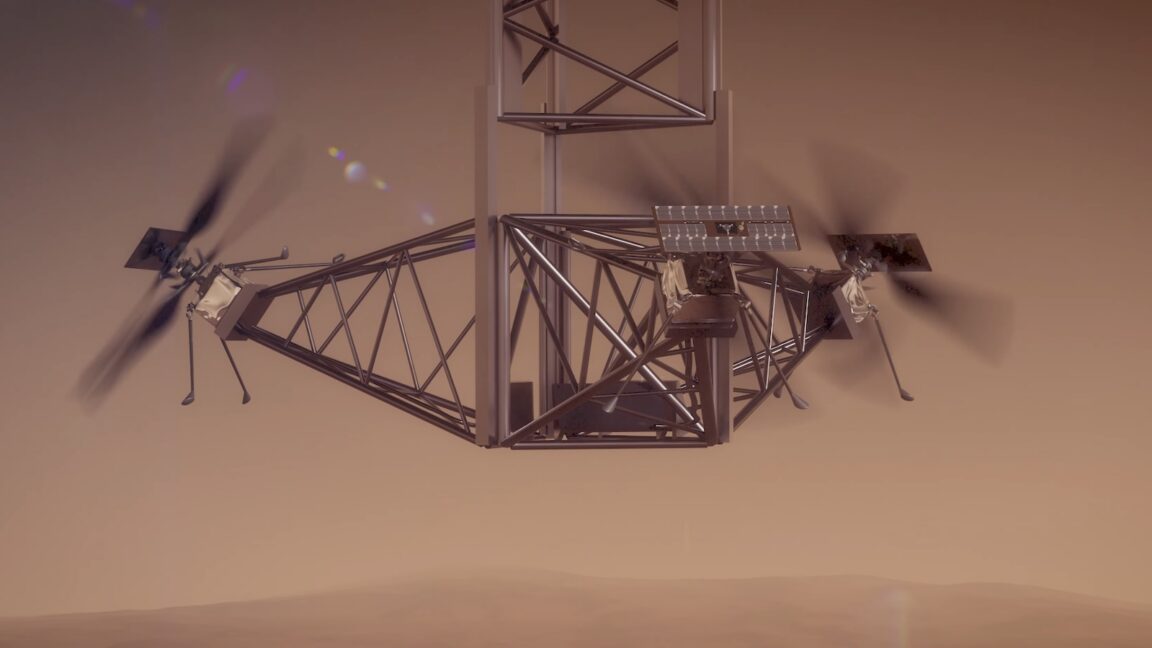
2. The Atmosphere Problem: Why Mars Is Tough for Rotors
Mars has a surface atmospheric pressure roughly 0.6% of Earth's, making lift generation a monumental challenge. Traditional helicopter blades would struggle to generate enough thrust. JPL engineers tackled this by increasing blade speed and optimizing rotor shape. The breakthrough came from using lightweight composite materials and a high-angular-velocity design that compensates for low air density. This is what enables future craft to lift heavier science instruments without requiring all wings be huge.
3. Rotor Technology Breakthrough: A New Design Paradigm
The new rotor system, tested in JPL's Mars simulation chambers, features larger diameter blades with advanced airfoil profiles. These blades spin at higher RPMs (over 2,800 rpm compared to Ingenuity's 2,400) and incorporate a unique twist distribution that maximizes lift at low Reynolds numbers. The breakthrough also includes improved pitch-control mechanisms, allowing for more precise maneuvering and stability during flight. This design is the core enabler for the next-generation rotorcraft.
4. Next-Generation Rotorcraft: Bigger, Bolder, Heavier
Unlike Ingenuity (weighing about 4 pounds), the new craft are designed to carry payloads up to 10 pounds—enough for advanced spectrometers, sample collection tools, and even small rovers suspended on cables. They'll be able to traverse distances up to 2 miles per flight, compared to Ingenuity's maximum of about 2,300 feet. This expanded capability makes them viable for scouting and sample-return missions, especially in rugged terrain inaccessible to ground vehicles.
5. The SkyFall Mission: Three Helicopters to Mars
NASA's SkyFall mission, targeting a launch as early as late 2028, will send three identical rotorcraft to Mars. They'll ride aboard a nuclear-powered spacecraft called Space Reactor-1 (SR-1), which is one of several tech demo initiatives announced in early 2025 by NASA Administrator Jared Isaacman. Each helicopter will operate independently, exploring diverse regions and cross-referencing data. This multiplies scientific return and provides redundancy in case of failures.
6. Space Reactor-1 (SR-1): Nuclear Propulsion for Fast Transit
SR-1 is a nuclear thermal rocket that dramatically reduces travel time to Mars—from about 7 months to just 3 months. This isn't just about speed; shorter transits mean less exposure to cosmic radiation for sensitive electronics and potentially for crewed missions later. The reactor also provides abundant power once at Mars, allowing the helicopters to recharge batteries faster and operate longer each Sol. This nuclear-powered mothership is the backbone of the SkyFall mission architecture.
7. Heavier Payloads: What They'll Carry
The new rotorcraft will carry advanced instruments like multispectral cameras, gas analyzers, and magnetometers. One key payload is a drill-and-sampling system capable of collecting subsurface material from rock faces and overhangs—locations previously unreachable. They can also deploy small ground sensors like seismic probes. The ability to carry 10+ pounds means these craft aren't just scouts; they're full-fledged science platforms. This capability is transformative for Martian exploration.
8. Longer Distances: Covering More Ground
Ingenuity's range was limited by line-of-sight communication with the Perseverance rover. The new helicopters feature autonomous navigation with onboard hazard detection, allowing them to fly beyond the mothership's direct line of sight. With improved battery technology and solar panels, they can cover up to 2 miles per flight—more than four times Ingenuity's record. This enables them to explore isolated features like mesas, lava tubes, and steep craters that rovers can never access.
9. Lessons from Ingenuity's Crash: Engineering Resilience
Ingenuity's final flight ended when a loss of navigation data caused a hard landing. Engineers analyzed telemetry and discovered that featureless terrain (sandy flats) confused the optical flow sensor. This has directly informed the new craft's design: they now incorporate redundant navigation systems (including inertial sensors and downward-facing lidar) that work robustly even in bland terrain. The crash wasn't a failure—it was a learning opportunity that made future missions safer.
10. The Future: Mars and Beyond
Martian rotorcraft technology isn't just for the Red Planet. The same principles can be adapted for Venus's dense clouds, Titan's thick nitrogen atmosphere, and even Earth's high-altitude platforms. JPL's breakthrough in rotor design—optimized for extreme environments—may eventually enable aircraft on gas giants or icy moons like Europa. As SkyFall and follow-up missions prove the concept at scale, we're witnessing the birth of interplanetary aviation.
From a small helicopter that defied odds to a fleet of nuclear-powered rotorcraft, the journey is just beginning. Ingenuity opened a door; the new technology is kicking it wide open. The next few years will bring unprecedented aerial capabilities to Mars, transforming how we explore alien worlds.
Related Articles
- A Guide to Understanding and Combating Extreme Weather Impacts on Young California Salmon
- Pinpointing the Culprit: A Guide to Automated Failure Attribution in LLM Multi-Agent Systems
- Xenonauts 2 Commander Exposes Internal Feud as Alien Invasion Looms
- Astronaut Captures Stunning Milky Way and Airglow from ISS
- Space-Based Missile Defense: Inside the US Space Force's 2028 Golden Dome Plan
- Space Launch Update: Starship Tests, Moon Landings, and the Golden Dome Initiative
- Turning Plastic Waste Into Clean Hydrogen: Old Car Batteries Power a Circular Solution
- How to Identify and Study a Prehistoric Twisted-Jaw Fossil