AI-Powered Manufacturing Takes Center Stage at Hannover Messe 2026
Manufacturing is undergoing a profound transformation. Across the globe, companies face mounting pressure to accelerate design cycles, streamline operations, and compensate for a shrinking skilled workforce. The adoption of artificial intelligence is no longer a question of "if" but "how fast" and "at what scale." At Hannover Messe 2026, running from April 20 to 24 in Hannover, Germany, NVIDIA and its partners are showcasing concrete examples of AI-driven manufacturing in action. Attendees will witness how accelerated computing, AI physics, intelligent agents, and robotics are reshaping everything from product design to factory operations.
The Industrial AI Cloud: A Foundation for Sovereign AI
Scaling AI across factories and supply chains demands robust infrastructure. Manufacturers need a secure, sovereign, and scalable foundation to handle the computational load of modern AI workloads. One answer is the Industrial AI Cloud, one of Europe's largest AI factories, built in Germany by Deutsche Telekom on NVIDIA AI infrastructure. This platform provides a trusted environment for accelerating AI and robotics across industries.
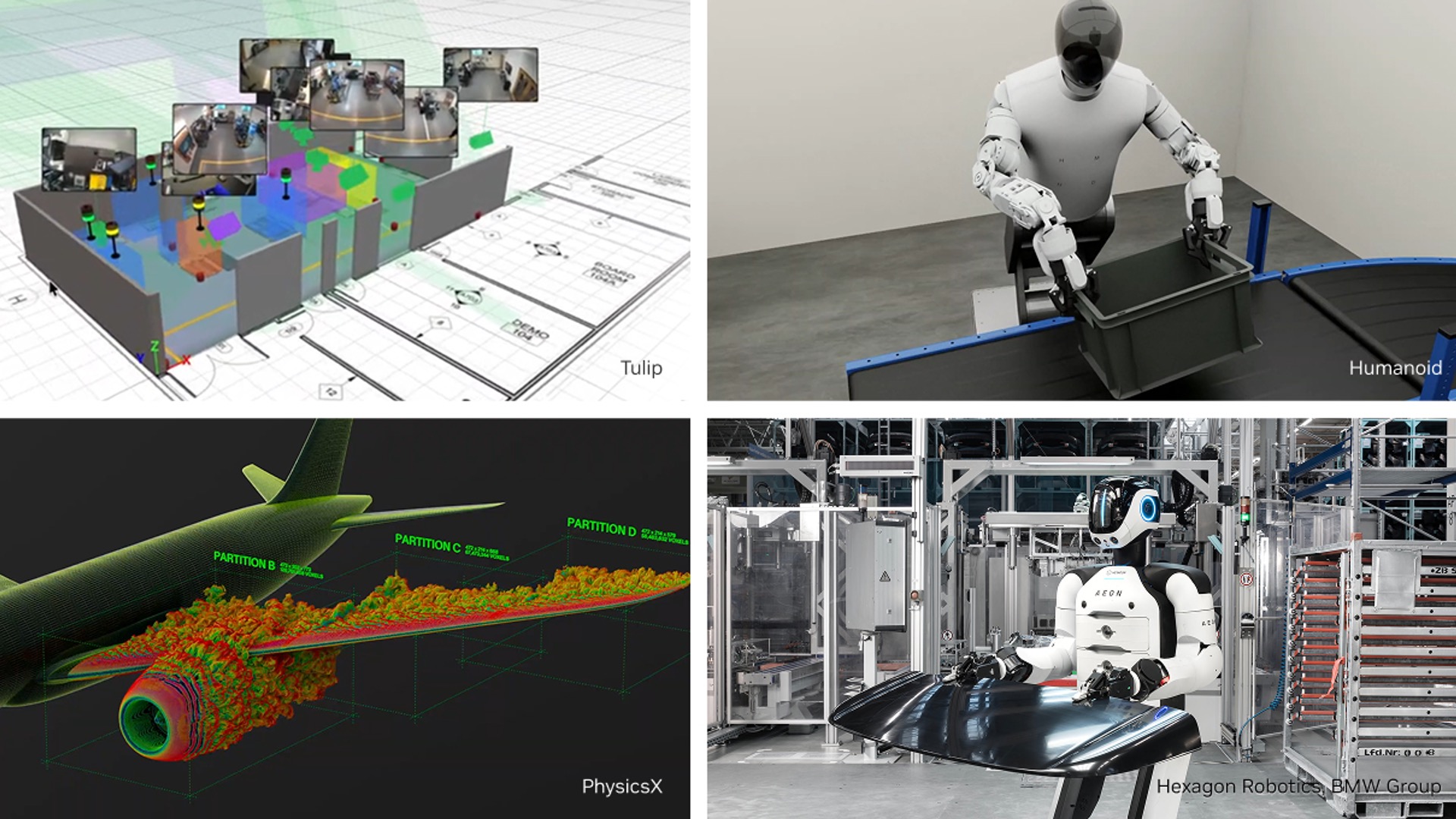
At the show, industry leaders such as Agile Robots, SAP, Siemens, PhysicsX, and Wandelbots are demonstrating how they leverage this sovereign AI platform. Use cases include AI physics–driven real-time simulation, factory-scale digital twins, and software-defined robotics. Notably, EDAG, a leading independent engineering service provider, announced it will run its industrial metaverse platform, metys, on the Industrial AI Cloud—bringing sovereign AI infrastructure to automotive and industrial engineering at scale.
Accelerated Systems from Key Technology Partners
To meet rising demand for AI infrastructure, Dell Technologies, IBM, Lenovo, and PNY are exhibiting NVIDIA-accelerated systems suitable for edge and data center deployments. These systems enable manufacturers to run faster simulations, develop and deploy computer vision models, and implement AI agents and robotics in production environments.
AI-Driven Engineering Transforms Design and Simulation
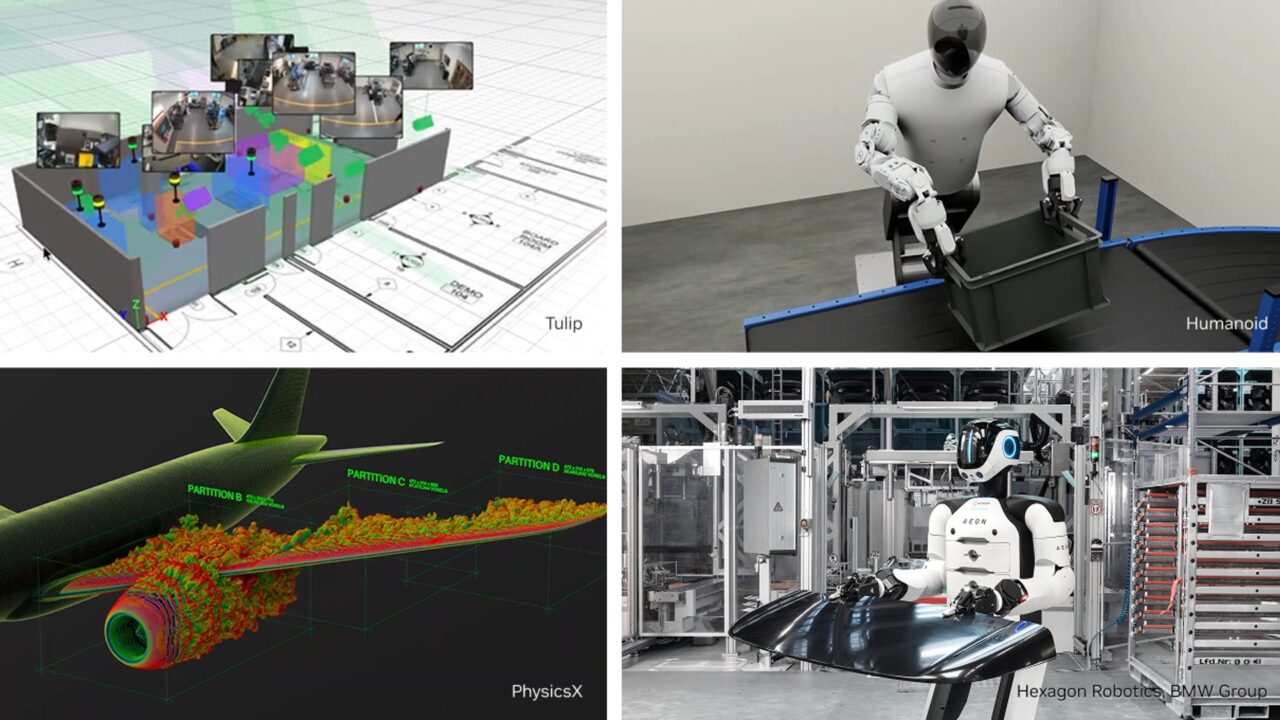
As industrial systems grow more complex, engineering software is being revolutionized by AI physics and agentic AI. At Hannover Messe, NVIDIA's partners are showcasing how AI-accelerated design and simulation unlock new possibilities. Companies like Cadence, Dassault Systèmes, Siemens, and Synopsys are integrating NVIDIA CUDA-X, AI physics libraries, Omniverse libraries, and NVIDIA Nemotron open models into their software suites. This integration enables real-time, physics-grounded simulation, AI-powered design exploration, and agentic workflows that empower engineers to iterate faster and more creatively.
Agentic AI and Physics Simulation
With agentic AI, engineers can now delegate routine tasks to intelligent software agents that explore design spaces, run simulations, and suggest optimizations. Combined with AI physics, these tools provide accurate, real-time feedback on product performance under varied conditions. The result is a dramatic reduction in development cycles—from months to weeks—while maintaining high fidelity and reliability.
Robotics and Vision AI in the Factory
The factory of the future is not just about software—it's also about intelligent machines. NVIDIA and its partners are demonstrating how humanoid robots and vision AI agents can operate seamlessly in real manufacturing environments. Agile Robots and Wandelbots are showcasing robots that learn tasks through demonstration and adapt to changing conditions on the factory floor. Meanwhile, computer vision systems powered by NVIDIA AI enable real-time quality inspection, anomaly detection, and autonomous material handling.
These technologies are already being deployed in pilot factories, proving that the concept of a fully AI-driven production line is becoming a tangible reality.
Conclusion: Building the Factory of the Future Today
Hannover Messe 2026 makes it clear: the factory of the future is not a distant vision—it is being built right now. Through partnerships with Deutsche Telekom, EDAG, Siemens, and dozens of other innovators, NVIDIA is providing the infrastructure, software, and AI expertise to accelerate this transformation. As industrial AI moves from pilot projects to large-scale deployment, the event serves as a blueprint for how manufacturers can leverage sovereign AI, digital twins, and intelligent robotics to achieve greater efficiency, resilience, and innovation.
Related Articles
- 10 Essential Things to Know When Starting Django
- Coursera and Udemy Join Forces: The World's Largest Skills Platform
- Shared Design Leadership: A Holistic Framework for Collaborative Teams
- From Data to Discovery: A Step-by-Step Guide to Turning Information into Insights
- How to Land a Summer Journalism Internship at Carbon Brief
- 7 Key Insights from GitHub's Accessibility Agent Experiment
- Digital Nomads Face Infrastructure Crisis: 7 Essential Tools for 2026 Revealed
- Embracing Difficulty: How Friction-Maxxing Can Transform Your Coding Journey