Decade of Stellaris: How Paradox's Space Epic Keeps Evolving with DLC and Free Updates
Stellaris, Paradox Interactive's grand strategy space opera, recently celebrated its 10th anniversary. Launched in 2016, the game has defied expectations by continuously receiving paid DLC and free updates, transforming it almost beyond recognition. With over 30 DLCs and dozens of major patches, Stellaris remains a shining example of the live-service model done right. Two of its game directors, Henrik Fåhraeus and Stephen Murray, share insights into what makes this spaceship of Theseus endure.
How has Stellaris evolved over the past decade?
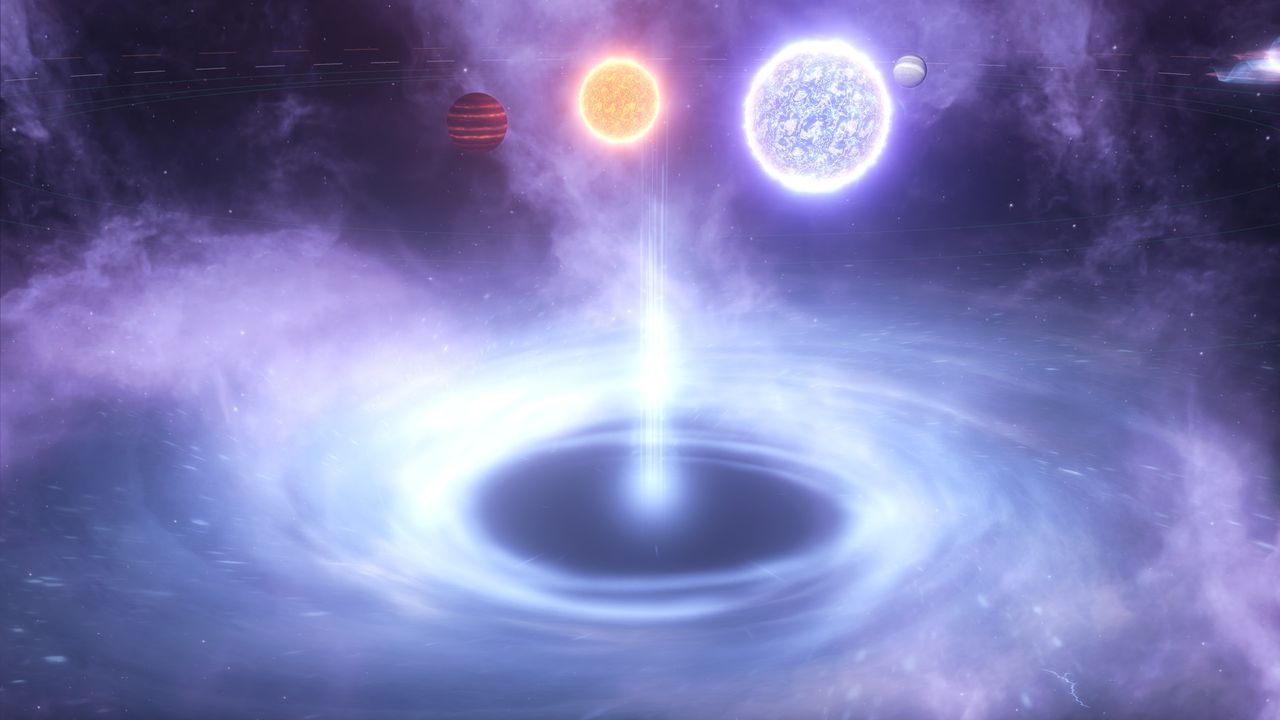
When Stellaris first launched, it was already a competent 4X title with emphasis on exploration. But through 41 major free patches and smaller updates, every major version jump—from 1.0 to 2.0, 3.0, and now 4.3—has introduced changes that rival full sequels. The current game shares little DNA with the original, prompting Stephen Murray, the fourth game director, to jokingly call it the "Spaceship of Theseus." The game's economy, diplomacy, warfare, and endgame crises have all been overhauled. For instance, the 2.0 update revamped FTL travel and borders, while 3.0 added population reworks. This constant evolution ensures players return to a new experience every few months, something Paradox carefully cultivates.
Why does Paradox continue releasing DLC for a 10-year-old game?
The DLC model was already proven with Crusader Kings 2 and Europa Universalis 4, but Henrik Fåhraeus, who originally sketched Stellaris, admits it wasn't always obvious that a grand strategy game could sustain a decade of expansions. During development, the team realized that long-term support funded by paid content, combined with transformative free patches, kept the player base engaged and growing. Stellaris now boasts over 30 DLCs (including cosmetics) that can cost upward of $200 even on sale. Yet each DLC adds meaningful mechanics—like espionage, galactic communities, or new origins—that enrich the core loop, encouraging both new and veteran players to invest. Paradox's approach also demonstrates confidence in the game's enduring appeal.
What keeps Stellaris feeling fresh after ten years?
According to Stephen Murray, the game's strength lies in the sheer variety of player fantasies it supports. You can roleplay as the Borg, a peaceful trade federation, or a genocidal swarm—thanks to an empire creator that has only grown more flexible. Each DLC adds new mechanics and events, while free patches rebalance systems and introduce quality-of-life improvements. Henrik Fåhraeus emphasizes the joy of exploration: unlike many 4X games, Stellaris makes every playthrough unpredictable through random events, anomalies, and emergent stories. The game also benefits from a dedicated modding community, which extends its replayability further. As Murray says, "If you come back six months later, the game is different."
How many free updates has Stellaris received?
As of early 2023, Stellaris has seen 41 major free patches and numerous smaller ones. The version numbering jumped from 1.0 to 4.3, with each major milestone—2.0, 3.0, 4.0—signaling a foundational overhaul. These updates are not just bug fixes but include new features like the espionage system, origins, and the megastructures. Paradox also releases free content alongside paid DLC, ensuring that all players get substantial upgrades. This strategy keeps the community unified and reduces fragmentation. The next Season 10 promises scenarios and nomadic mechanics, proving that even a decade in, Stellaris isn't slowing down.
What do the game directors see as Stellaris's core identity?
For original director Henrik Fåhraeus, the core is "the joy of exploring the unknown." Unlike many strategy games that focus on conquest or optimization, Stellaris emphasizes discovery—each new galaxy holds different anomalies, alien species, and story events. Current director Stephen Murray adds that the game is fundamentally about offering multiple player fantasies. Whether you want to be a science-based federation builder or a hive mind that consumes worlds, Stellaris lets you craft that narrative. This identity has persisted through all updates, acting as the "shape of the hull" in the Spaceship of Theseus analogy.
What is the "Spaceship of Theseus" analogy for Stellaris?
Stephen Murray coined the term to describe how Stellaris has been gradually transformed over a decade. In the ancient paradox, the Ship of Theseus is replaced plank by plank until no original part remains—yet it is still considered the same ship. Similarly, Stellaris's code, mechanics, and even its game director have changed (Murray is the fourth), but the game retains its identity. Every overhaul—from FTL systems to population management—has been incrementally introduced, keeping the soul intact. This analogy highlights how Paradox manages to modernize a game without alienating its core audience, and it reflects the studio's commitment to iterative innovation.
How does Stellaris's empire builder support diverse player fantasies?
The empire creation screen is Stellaris's most powerful tool. Players can choose origins, civics, ethics, and species traits to craft almost any sci-fi trope: think Star Trek's Borg (devouring swarm), Starcraft's Zerg (organic expansion), or a utopian republic. Over the years, DLCs have expanded these options: Utopia introduced hive minds, Synthetic Dawn added machine empires, and Federations deepened diplomacy. The result is that no two empires need to play alike. Murray recalls his early days as a player trying different combinations, and that passion drives the team to keep adding more. This flexibility is why players often return to test new strategies, ensuring Stellaris remains a living game.
Related Articles
- How to Get a Steam Controller After the Sellout: Queue Up or Get Scalped
- Battlefield 6 Season 3 Launch Date Confirmed: Gameplay Trailer Channels Battlefield 4 Era Nostalgia
- The Infamous Half-Life 2 Sewer Puzzle: How It Got Easier Over Time
- From Broken to Brilliant: The Ultimate Guide to Diablo 4's Transformation (2025 Edition)
- Dead as Disco Early Access: A Neon-Soaked Kung-Fu Rhythm Brawl Through Music Videos
- 5 Things You Need to Know About the Lego Sega Genesis Set
- 10 Reasons Why eBay Should Ditch GameStop and Adopt Bitcoin to Slash $1.2 Billion in Fees
- How Plants Perform a Mathematical Balancing Act with Sunlight