The Myth of the Unpickable Lock: A Tale of Impressioning and Persistence
Introduction
The idea of an ‘unpickable’ lock is as enduring as it is flawed. No lock is truly immune to determined attackers, but the intellectual challenge of designing defenses against picking and then finding ways around them continues to fascinate. A recent example is the traveling key lock from Works By Design, which was marketed as ‘unpickable.’ The company sent samples to lock pickers like Lock Noob to test just how secure it really is.
The Traveling Key Lock Design
Unlike conventional pin tumbler locks, the traveling key mechanism moves the actual key inside the lock body. This design complicates traditional picking methods because the pins interact with a moving part rather than a static plug. The original video from Works By Design explains the engineering logic behind this approach. Lock Noob provides a summary before attempting to crack it.
The key challenge for any picker is that the lock resists standard techniques like bumping or raking. Instead, a more sophisticated attack is required: impressioning.
The Impressioning Attack
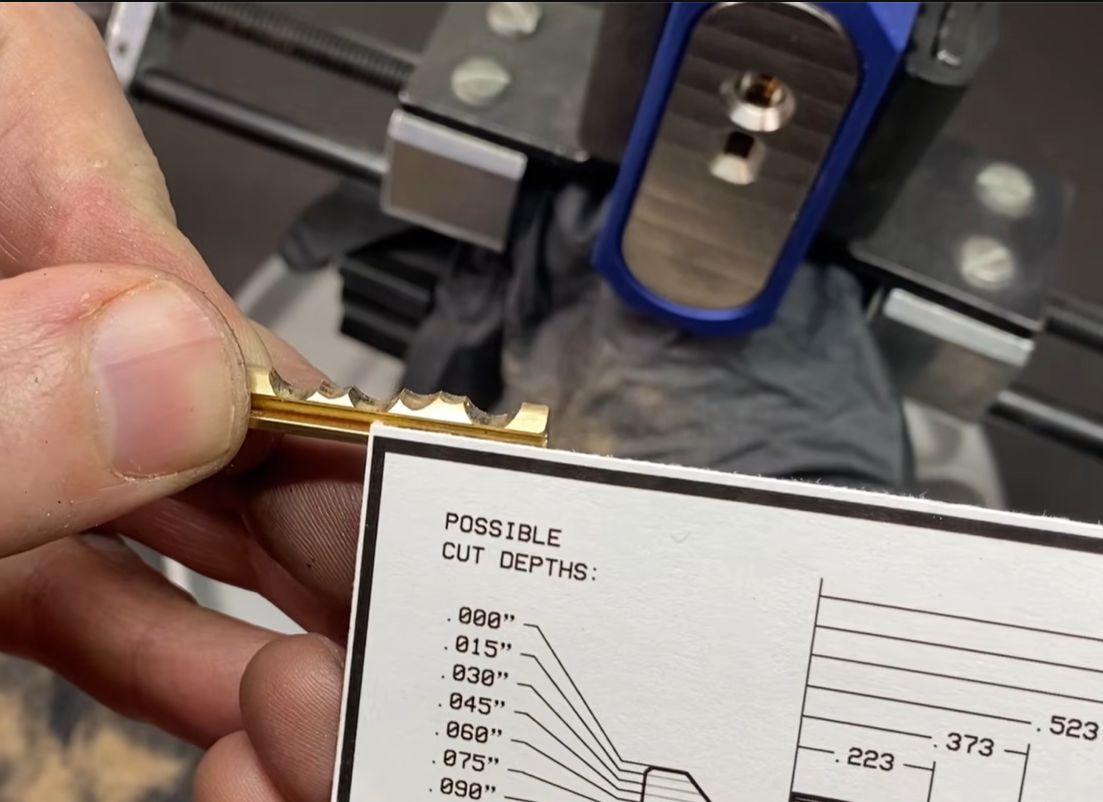
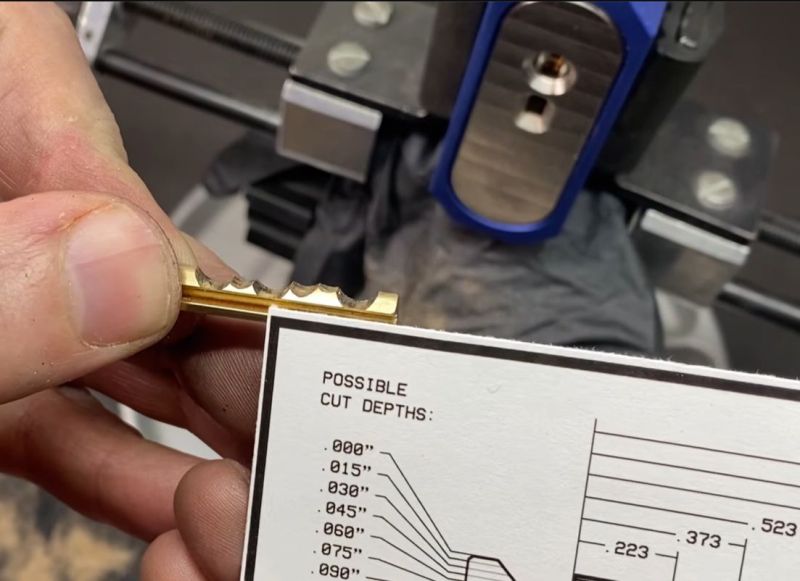
Impressioning works by inserting a blank key and applying rotational pressure. The pins scrape against the metal, leaving tiny marks on the key where the material needs to be filed down. In this lock, the physical key moves inside the mechanism, but the principle remains the same. Lock Noob used brass blanks and repeatedly inserted, turned, and filed the key — a tedious cycle that took over an hour.
What made this attempt particularly interesting was the added plastic pin, which was intended to foil impressioning attacks. However, that obstacle turned out to be less effective than expected. The plastic pin was delicate, and part of it tore off during the process. After more than sixty minutes of turning, filing, and checking, the lock finally rotated, confirming that the impressioning attack had succeeded.
The Plastic Pin Weakness
A subsequent teardown of the lock revealed the plastic pin’s fragility. The top portion had been sheared off under the stress of the impressioning process. This pin was designed to prevent attackers from easily reading the pin heights from marks on the key, but its material weakness undermined that defense. After replacing the damaged pin with a fresh one, Lock Noob attempted another approach: a foil-based impressioning attack.
Foil-Based Attack Attempt
Using a skeleton key wrapped in aluminum foil, the idea is that the pins would press into the soft foil and leave a nearly instant impression of the correct bitting. However, this method failed because the pins enter sideways in this lock design, so they do not create a useful impression on the foil. Theoretically, if the key blank had a solid side, the foil might work, but that would require refining the technique and possibly reshaping the blank. The failure of the foil attack suggests that while the lock is not impregnable, some attacks are significantly harder than others.
Defining ‘Unpickable’
The entire experiment underscores how subjective the term ‘unpickable’ really is. To an average homeowner, a lock that requires an hour of careful filing by a skilled picker might as well be unpickable. But to the lock sport community, that same lock is a fun challenge. As the video shows, the definition depends entirely on context and the resources an attacker is willing to commit.
This is not the first time an ‘unpickable’ lock has been debunked. In 2020, the channel Stuff Made Here created a custom lock that they claimed was secure. It was quickly dismantled by the Lock Picking Lawyer, who found multiple exploits before even needing to resort to impressioning. The contrast highlights how even well-designed locks fall short when their weaknesses are exposed.
Lessons Learned
Traveling key designs generally force attackers to use tedious methods like impressioning, which can be a strong deterrent. However, the plastic pin vulnerability shows that clever additions must be robustly engineered. A redesign that replaces the plastic pin with a harder material or adds secondary anti-impressioning features could potentially resist the technique demonstrated here. It would be fascinating to see such a lock challenged by the community — if it can frustrate both hobbyist and professional lock pickers, it might come close to being ‘unpickable’ in a practical sense.
Ultimately, no lock can withstand all attacks. Bolt cutters, angle grinders, or simple physical force can bypass any mechanism. The true measure of a lock’s security is whether it deters the casual thief and buys time against a determined adversary. The Works By Design lock may not live up to the ‘unpickable’ label, but it certainly provided an entertaining lesson in the cat-and-mouse game of lock design and picking.
Related Articles
- The LiteLLM AI Gateway Attack: A Supply Chain Cautionary Tale
- Urgent Kernel Security Update: Two Stable Releases Fix Critical Dirty Frag Flaw
- How to Fortify Your Medical Device Company Against Iran-Linked Wiper Attacks
- 10 Ways Automation and AI Are Reshaping Cybersecurity Execution at Machine Speed
- 10 Critical Lessons from the Foxconn Ransomware Attack
- 8 Essential Defenses Against BRICKSTORM Malware in vSphere Environments
- AI Security Classifier Fails: $2.44M Loss Blamed on Biased Data and Silent Library Update
- Germany Emerges as Prime Target in Europe's Escalating Cyber Extortion Wave