How to Investigate Mysterious 'Little Red Dots' from JWST Using X-Ray Data
Introduction
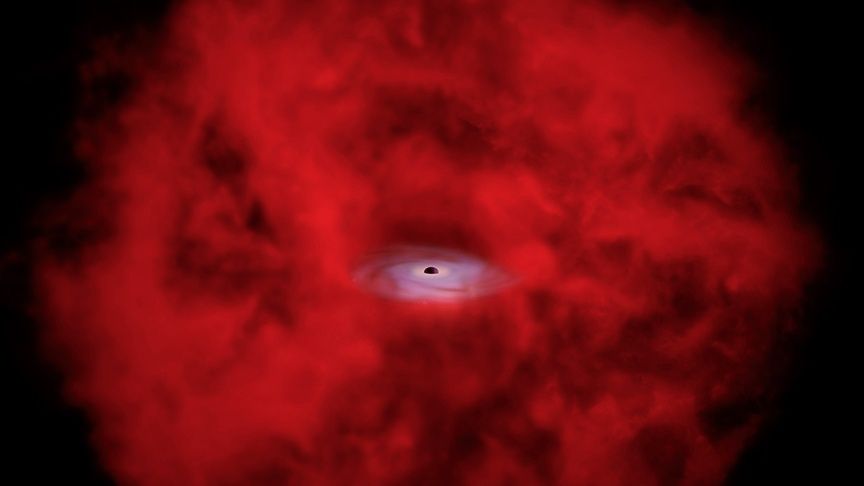
The James Webb Space Telescope (JWST) has revealed puzzling 'little red dots' in the early universe—compact, red objects that defy easy classification. Recent X-ray observations suggest that some of these dots could be black hole stars, hypothetical objects powered by tiny black holes at their cores. This guide will walk you through the process of identifying potential black hole stars among JWST's little red dots by leveraging X-ray data from observatories like Chandra or XMM-Newton. Whether you're a budding astronomer or a curious enthusiast, follow these steps to conduct your own investigation.
What You Need
- Access to JWST image data (from MAST or STScI archives)
- X-ray data from Chandra, XMM-Newton, or eROSITA (public archives)
- Astronomical software (e.g., SAOImage DS9, TOPCAT, Python with Astropy)
- Basic knowledge of image alignment and spectral analysis
- Patience — this is a research-level task
Step-by-Step Guide
Step 1: Identify Little Red Dots in JWST Images
Download JWST NIRCam or MIRI images from a deep field (e.g., COSMOS-Web, CEERS). Little red dots appear as compact sources with extremely red colors in F277W and F444W filters. Use DS9 to mark candidate objects. Look for sources that are faint or invisible in shorter wavelengths (e.g., F115W) but bright in longer ones. This color signature suggests high redshift or obscured activity.
Step 2: Cross-Match with X-Ray Catalogs
Access existing X-ray point-source catalogs from Chandra Deep Field-South or XMM-Newton Deep Survey. Use TOPCAT to perform a positional cross-match with your JWST source list. Set a matching radius of ~1-2 arcseconds (typical bright-source localization accuracy). Flag any little red dots that have a corresponding X-ray detection. This is your preliminary list of candidates.
Step 3: Align Images for Verification
For candidates found in Step 2, download the actual X-ray exposure maps and event files. Align the JWST image (F444W) with the X-ray image using common bright sources (e.g., stars, active galactic nuclei). Use the astrometry.net tool or manual alignment in DS9. Check that the little red dot lies within the X-ray error circle. If alignment is good, proceed.
Step 4: Extract X-Ray Spectra and Counts
Using CIAO (for Chandra) or SAS (for XMM-Newton), extract source and background spectra. Define a circular region around the JWST position (radius ~2-3 arcseconds) and a background region away from any sources. Generate a spectrum and compute net counts. For faint sources, you might only have a few photons. Use Bayesian methods (e.g., APEC models) to estimate hardness ratios or power-law slopes.
Step 5: Look for Signatures of Black Hole Stars
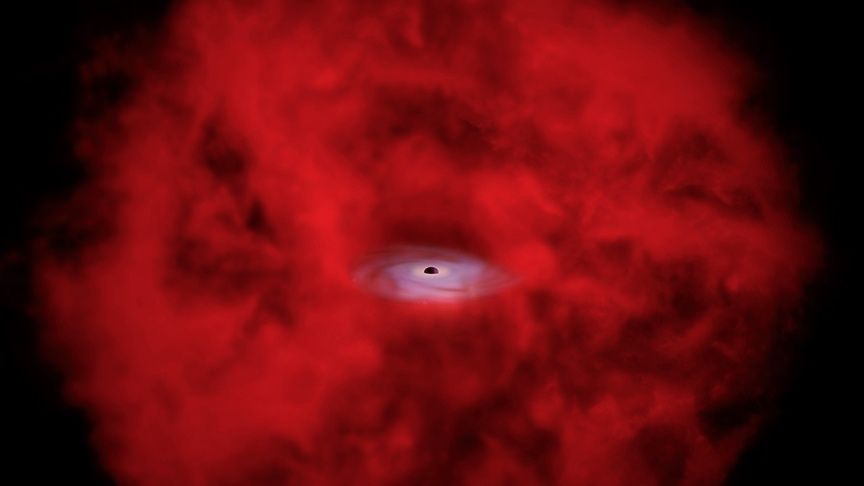
Black hole stars are theorized to emit X-rays from an accretion disk around a small black hole (10-100 solar masses) embedded in a massive star. Their X-ray spectra are typically soft (steep power-law index >2) with no iron line or strong absorption. Compare your extracted spectrum to known models. If the X-ray luminosity (Lx) is exceptionally high relative to optical (Lopt), it may point to an active black hole rather than a standard stellar remnant.
Step 6: Check for Variability
If your candidate has multiple X-ray observations (e.g., from different eras), examine count-rate variability. Black hole stars might show erratic flares. Use the EXOSAT method for light-curve binning. A source with >50% flux change between visits is a strong candidate for an accreting black hole system.
Step 7: Compare with Other Explanations
Rule out more mundane possibilities: a quasar (AGN) would show broad emission lines in JWST spectroscopy; a supernova remnant would have extended morphology. If your little red dot has no detectable lines in JWST’s NIRSpec and appears point-like in both JWST and X-rays, the black hole star hypothesis remains viable. Document all evidence.
Tips for Success
- Use the most recent public JWST data releases — they have better calibration and often include deeper exposures.
- Always verify astrometry; a slight offset can create a false match. Use multiple reference stars.
- Simulate false positives: random spatial coincidence rates are high in crowded fields. Estimate the probability that an X-ray source is unrelated.
- Collaborate — join forums like the JWST Users Committee or AstroBetter to share candidates and get feedback.
- Publish your findings on arXiv or as a research note if you find convincing evidence.
Remember, the discovery of a black hole star would be a major breakthrough. Approach each step critically, and let the data guide you.
Related Articles
- 66-Million-Year-Old Dinosaur Bones Yield Shock Organic Remains, Rewriting Fossilization Rules
- How Astronomers Captured the First Direct Image of a Cosmic Web Filament
- How Scientists Discovered the Hidden Map in Your Nose: A Step-by-Step Guide to Understanding Smell Organization
- Exclusive: Prestigious University Domains Hijacked to Serve Porn and Malware – Investigation Reveals Lax Security
- The Exodus: 10 Critical Reasons Teachers Are Leaving the Classroom — and What Schools Can Do
- How to Assess the Hidden Costs of Newt Metamorphosis Across Sexes
- 10 Fascinating Facts About NASA's Mars Helicopter Rotor Breaking the Sound Barrier
- Ancient Brazilian Microfossils Rewrite Story of Early Life: Q&A