Beyond Four Wheels: How Auto China 2026 Redefines Automotive Intelligence with Physical AI
Introduction: A New Era for Auto China
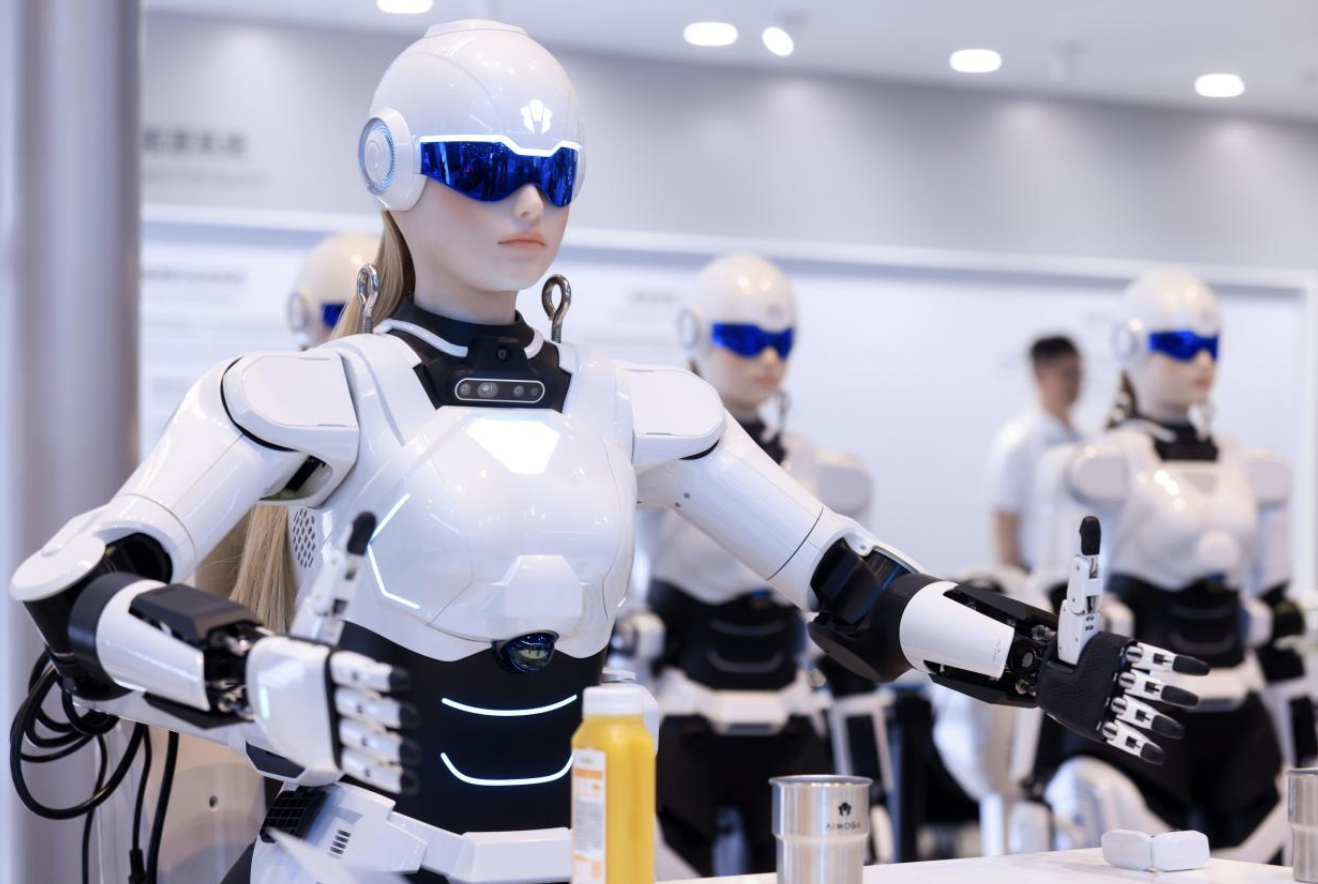
The Beijing International Automotive Exhibition has long been a barometer for the direction of China's automotive industry. Over the past decade, the focus shifted from pure electrification to software-defined vehicles. But now, at Auto China 2026, a deeper transformation is underway. Exhibitors are no longer just showcasing smarter cars—they are unveiling what many call Physical AI: the extension of artificial intelligence beyond screens and sensors into machines that can move, interact, and work alongside humans. This year's show signals a robotic shift that goes far beyond the car itself.
The Evolution from Electric to Intelligent
China's auto industry has matured rapidly. Early electric vehicles (EVs) were about battery range and charging infrastructure. Then came the era of software-defined vehicles (SDVs), where over-the-air updates and connected services took center stage. Now, at Auto China 2026, the conversation has expanded to include autonomous mobile robots, humanoid helpers, and robotic arms integrated into vehicle platforms. This is not a sideline—it is a central theme.
What Is Physical AI?
Physical AI refers to artificial intelligence that operates in the physical world, not just in digital realms. For automakers, this means equipping vehicles and factory robots with perception, reasoning, and manipulation capabilities. At the show, companies demonstrated robots that can navigate crowded show floors, assist in assembly lines, and even serve as mobile concierges. The data and algorithms behind autonomous driving are being repurposed for general-purpose robotics.
Key Exhibits and Announcements
The exhibition halls were filled with prototypes that blurred the line between car and robot. Here are some of the most notable displays:
- Humanoid Assistants: Several startups presented humanoid robots designed to work alongside humans in factories and showrooms. These robots use the same sensor suites—LIDAR, cameras, ultrasonic—found in high-end EVs.
- Autonomous Utility Vehicles: Beyond passenger cars, companies showed small rugged vehicles intended for logistics, agriculture, and delivery. These platforms can be reconfigured with robotic arms or cargo modules.
- Integrated Robotic Cockpits: Concept cars featured adjustable interiors where seats transform into workstations. Steering wheels fold away, and robotic arms emerge to help with tasks like typing or serving drinks.
The Factory Floor Revolution
Inside the adjacent robotics pavilion, major automakers unveiled their latest manufacturing advancements. BYD demonstrated a fully autonomous welding line where robots communicate with each other via a shared AI model. NIO showcased a mobile charging robot that drives itself to parked EVs. These innovations hint at a future where car production is as intelligent as the cars themselves.
Why This Shift Matters
The move toward Physical AI is not just a technological trend—it is a strategic one. China's automotive industry faces slowing domestic EV sales and increasing competition. By expanding into robotics, companies can leverage their existing investments in sensors, chips, and AI to create new revenue streams. Moreover, the line between vehicle and robot is dissolving. A self-driving car is essentially a robot that carries people; an autonomous forklift is a robot that moves cargo. Automakers are realizing they can build both on the same platforms.
Regulatory and Infrastructure Considerations
As robots become more common, regulators are taking notice. Beijing has already introduced guidelines for autonomous delivery robots on sidewalks. At Auto China 2026, several panels discussed the need for unified standards in robot safety, data privacy, and liability. The exhibition itself served as a testing ground: roaming robots interacted with visitors, collecting data on human-robot interaction.
Looking Ahead: What's Next?
The robotic shift at Auto China 2026 is likely just the beginning. Several trends are expected to accelerate:
- Convergence of AI models: The same neural networks that drive cars may soon drive robots, with shared training data and simulation environments.
- Lower costs for sensors and actuators: As production scales, the cost of equipping a robot with LIDAR and dexterous hands will drop, making Physical AI affordable for small businesses.
- Partnerships with tech giants: We can expect carmakers to collaborate more closely with AI chipmakers and cloud providers to build the brains behind physical robots.
Auto China 2026 may be remembered as the moment when the Chinese auto industry stopped thinking of itself as merely a car industry—and started becoming a robotics and AI industry. The vehicles on display still had four wheels, but they were just one part of a much larger ecosystem of intelligent machines.
Conclusion
The Beijing International Automotive Exhibition has always been a mirror of China's automotive ambitions. This year, it reflects a future where intelligence is not confined to the dashboard but extends to every moving object around us. For visitors, the message was clear: the robotic shift is already here, and it is transforming not just how we travel, but how we live and work. The next decade will be defined by Physical AI—and Auto China 2026 was its first major showcase.
Related Articles
- Powering Europe’s Digital Transformation: How Microsoft Azure Delivers Scalable Cloud and AI Solutions
- Plex's Remote Watch Pass to See 50% Price Hike in 2026: What Subscribers Need to Know
- Nintendo Switch 2 Splatoon Raiders Preorder Price Slashed: Amazon and Walmart Shave 17% Off Physical Copies
- Meet Fin Operator: The AI Agent That Manages Your AI Customer Service Agent
- Amazon Kindle Scribe Colorsoft Hits Australia Early: Pre-Orders Open Now from AU$699
- 10 Ways Amazon's Alexa+ AI Is Revolutionizing Your Shopping Experience
- macOS 27: What’s New in the UI Refinement and How It Fixes Tahoe Issues
- How to Install and Use the Orion for Linux v0.3 Beta: A Complete Guide